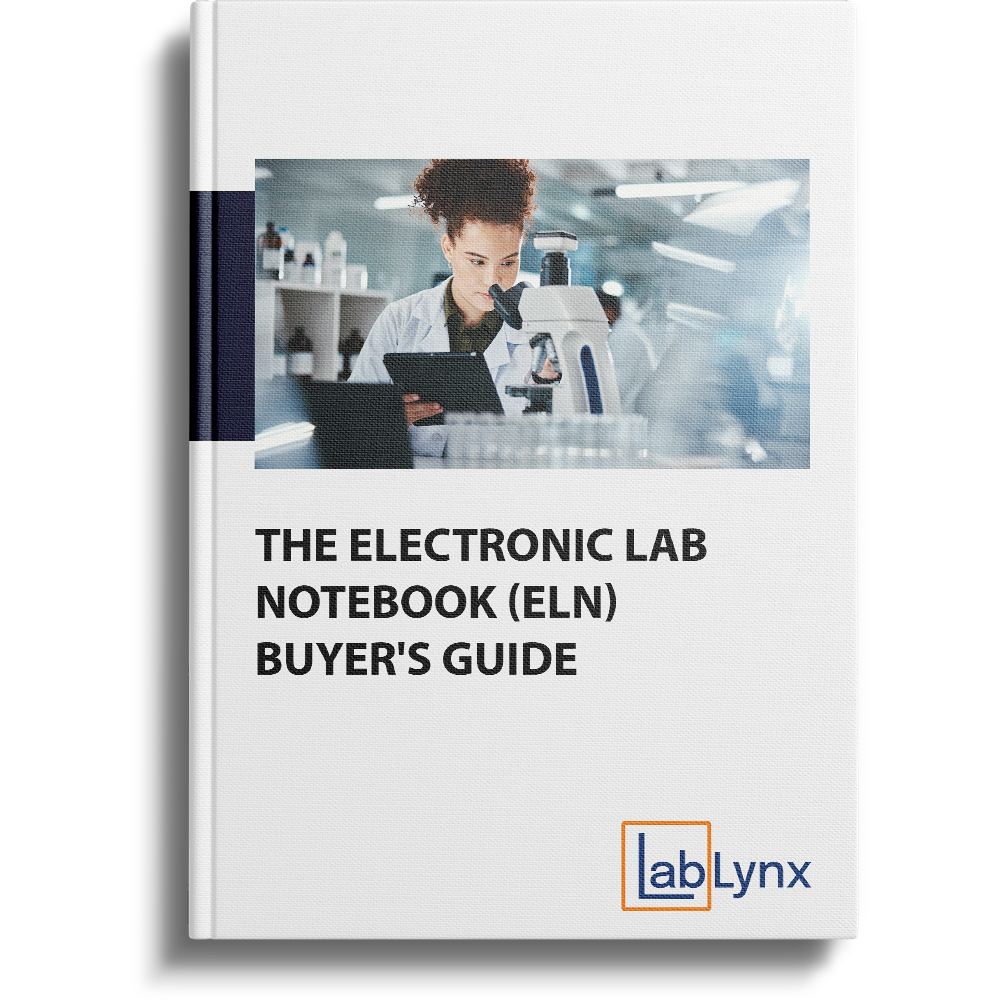
Free guidePDF · 21 pages · 15-minute read
The Electronic Lab Notebook (ELN) Buyer's Guide
A free 21-page LabLynx electronic lab notebook buying guide, from the features to look for to adoption challenges, return on investment and future trends.
Get your free copy
- 21 pages
- Instant download
"*" indicates required fields
We also email you the link.
An electronic lab notebook (ELN) is a digital replacement for the paper lab notebook: it captures, organizes and manages experimental data, observations and procedures, so records stay accurate, secure and easy to find. This LabLynx guide helps a lab choose one: the features to look for, the benefits to expect, the adoption challenges to plan for and how to evaluate its own needs.
What you will learn
- Why labs are moving off paper. Misplaced records, transcription errors and poor searchability, and why cloud-based ELNs are becoming the preferred choice.
- The seven features to look for. From ease of use and compliant records to search, integration with instruments and vendor support.
- What to expect, and what to plan for. The benefits of an ELN, and fixes for resistance, data migration, training and integration.
- How to evaluate your own lab's needs. Workflow, features, compliance, scalability and return on investment, in that order.
What is inside the guide
From what an ELN is to the trends ahead: here is what the guide covers.
Understanding electronic lab notebooks
An ELN replaces the paper notebook for experimental data, observations and procedures, without the misplaced records, transcription errors and poor searchability of paper. See its key advantages, why cloud-based ELNs are becoming the preferred choice, and six features to prioritize when you evaluate one.
Go deeper: LIMS vs ELN
Key features to look for
Seven features set the most effective ELNs apart: an easy interface, secure and compliant documentation, collaboration and remote access, search and data management, customization, integration with instruments and lab systems, and reliable support. For each, the guide lists what to check, such as FDA 21 CFR Part 11 compliant electronic signatures and detailed audit trails.
Go deeper: 21 CFR Part 11 compliance in the lab
Benefits of implementing an ELN
Moving off paper brings better data integrity, faster research, easier collaboration, simpler compliance, stronger data security, room to grow and lower operating costs. The guide shows how each benefit appears in daily lab work.
Overcoming common ELN adoption challenges
Five hurdles come up most often: resistance to change, accurate data migration, staff training, integration with existing systems and ongoing compliance. Each comes with a practical fix, from involving the team early in selection to testing the migration before going live.
Go deeper: Migrating from paper lab notebooks to an ELN
Evaluating your lab's needs
Choosing well starts with your own lab: assess current workflows, define the features you need, identify your compliance requirements and plan for growth. Then estimate the return on investment from labor hours, materials, data loss avoided and research efficiency.
Real-world case studies
Four examples show ELN adoption in practice: a biotechnology lab, a mid-sized pharmaceutical company, a university research group and an environmental testing laboratory. Each describes the problem it had before, from paper notebooks to manual record-keeping, and what improved in collaboration, compliance, data quality or traceability.
Go deeper: How ELNs are advancing research across industries
Future trends in ELNs
AI and machine learning, stronger security and compliance monitoring, better integration through open standards and APIs, richer remote collaboration and interfaces that adapt to each user. These are the trends to weigh when you choose an ELN that has to last.
Key takeaways
- Paper no longer keeps up. Misplaced records, transcription errors and poor searchability are why labs move their documentation to an ELN.
- Seven features matter most. Ease of use, secure and compliant records, collaboration, search, customization, integration and reliable support.
- Compliance should be built in. Look for audit trails, version control and electronic signatures that support FDA 21 CFR Part 11, ISO 17025 and GLP.
- Plan the adoption, not just the purchase. Involve staff early, test data migration before going live and train on common lab scenarios.
- Start from your own lab. Assess workflows, define the features you need, identify your regulations, plan for growth and estimate the return on investment.
Evaluating your lab's needs, in five steps
Assess your current workflow. Find where digital records would help most: data entry, experiment tracking, regulatory compliance or collaboration between teams.
Define essential features. Secure data storage, integration with your instruments and software, an intuitive interface, real-time collaboration and compliance support.
Identify compliance requirements. Confirm support for the standards you work under, such as FDA 21 CFR Part 11, ISO 17025 or GLP, with audit trails, electronic signatures and version control.
Plan for scalability. Choose an ELN that grows with your research, with flexible, customizable workflows and simple user management.
Estimate return on investment. Weigh savings in labor hours and materials, less data loss and more efficient research against the initial investment.
This page is the summary. The full guide has the detail, all 21 pages of it.
PDF · 21 pages · 15-minute read. Free.
Who it is for
Lab managers and directors
who are choosing an ELN and want a clear list of the features, benefits and costs to weigh before they buy.
Research scientists and teams
who want to move off paper notebooks and share data across teams and sites without losing records.
Quality and compliance leads
who need audit trails, electronic signatures and version control that support FDA 21 CFR Part 11, ISO 17025 and GLP.
Written for Biotechnology, pharmaceutical, university research and environmental testing labs.
What features does the guide say to look for in an ELN?
How does the guide recommend evaluating a lab's needs before choosing an ELN?
What benefits does the guide say a lab can expect from an ELN?
What adoption challenges does the guide prepare a lab for?
Why does the guide favor cloud-based ELNs?
What trends does the guide expect to shape ELNs?
More free guides
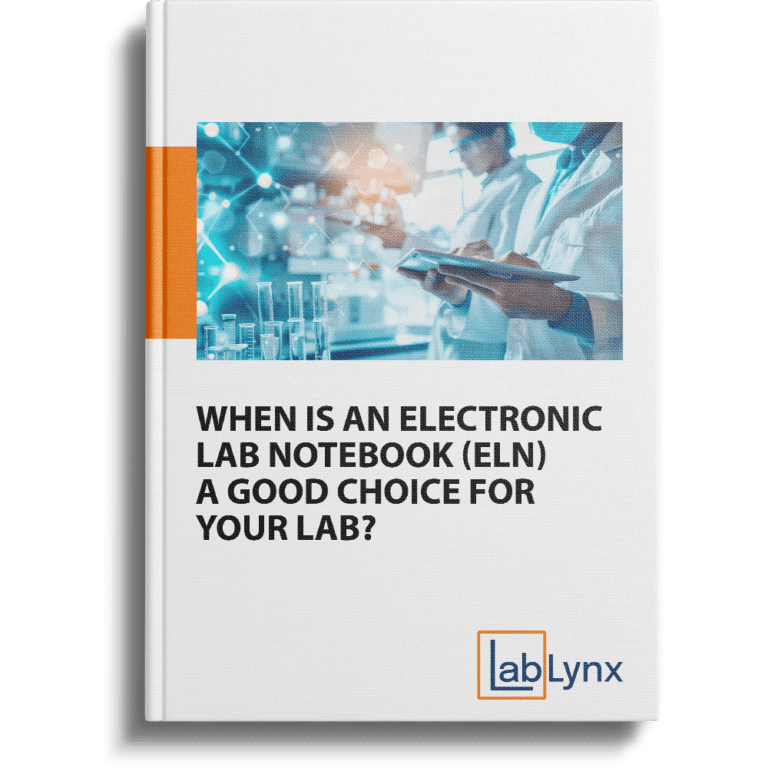 Free guideWhen is an Electronic Lab Notebook (ELN) a Good Choice for Your Lab?Discover how an Electronic Lab Notebook (ELN) can streamline lab operations, improve data integrity, and enhance collaboration. ELNs are ideal for managing complex workflows, ensuring compliance, and increasing efficiency. This guide explores how adopting an ELN can future-proof your lab, boost productivity, and drive innovation.Get this free guide
 Free guideThe Electronic Lab Notebook (ELN) Guide for Academic Research LabsWritten specifically for academic researchers, this comprehensive guide covers everything you need to know about electronic lab notebooks. Learn how to choose the right ELN for your research group, get your team on board, meet grant and publication requirements, handle data sharing with collaborators, and maintain compliance without adding complexity.Get this free guide
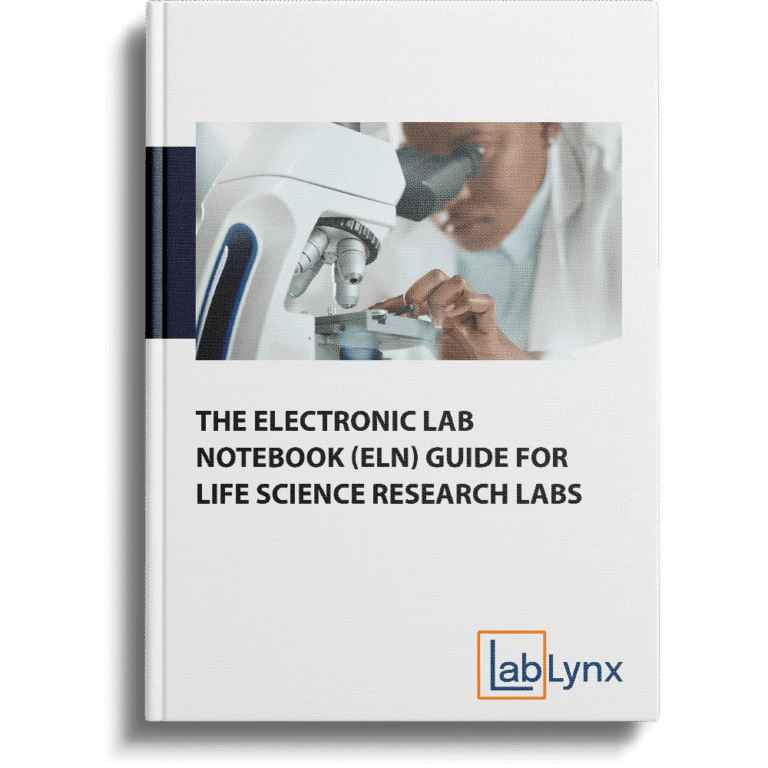 Free guideThe Electronic Lab Notebook (ELN) Guide for Life Science Research LabsThe comprehensive ELN guide for life science researchers. Learn how to document protocols for reproducibility, meet FDA 21 CFR Part 11 requirements, protect intellectual property, collaborate with CROs, prepare regulatory submissions, integrate with instruments, and transition from paper while maintaining compliance standards.Get this free guide
Free guide
The Electronic Lab Notebook (ELN) Buyer’s Guide
PDF · 21 pages · 15-minute read
- Why labs are moving off paper
- The seven features to look for
- What to expect, and what to plan for