Free guidePDF · 73 pages · 80-minute read
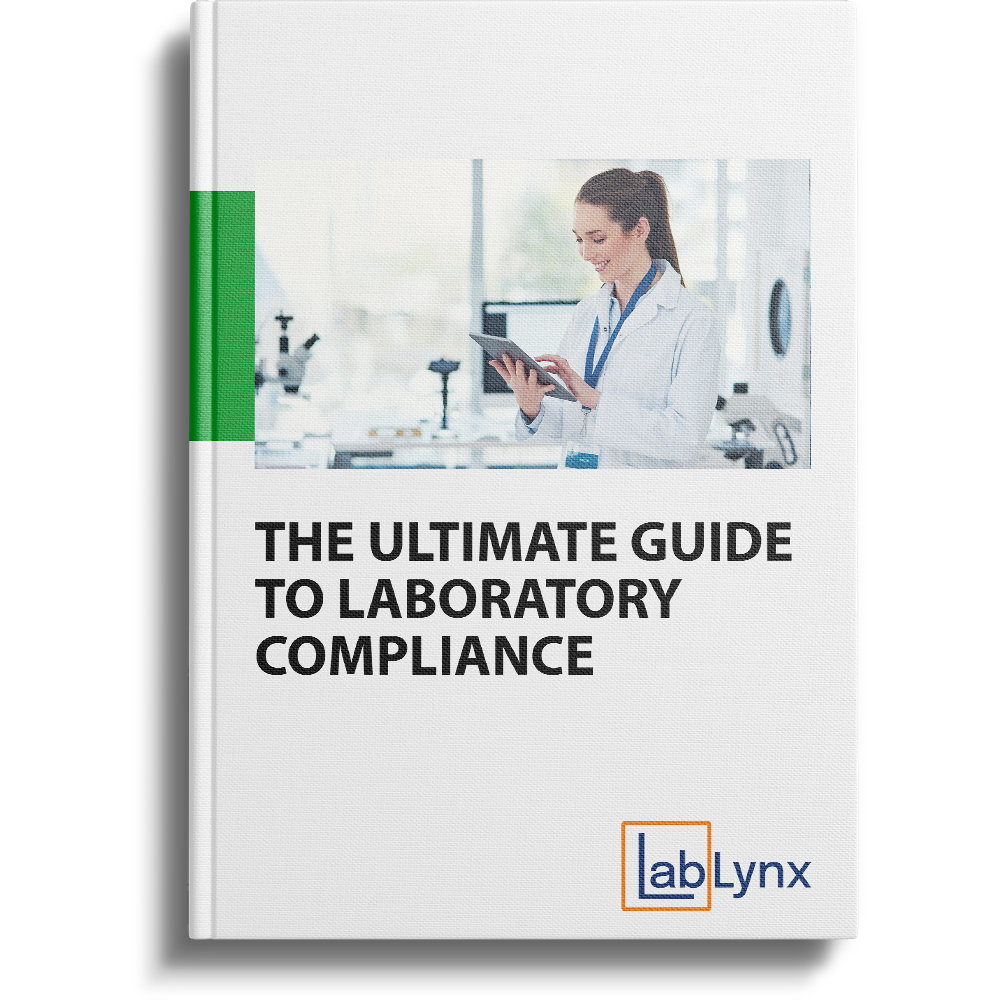
The Ultimate Guide to Laboratory Compliance
A free 73-page LabLynx guide to laboratory compliance standards, from clinical and research labs to environmental, pharma, food, industrial, forensic and chemical labs.
Get your free copy
- 73 pages
- Instant download
"*" indicates required fields
We also email you the link.
Laboratory compliance is how a lab meets the regulations, standards and accreditation requirements that govern its testing, records, privacy and safety, and stays ready to show it at any audit or inspection. This LabLynx guide sets out the key standards for eight kinds of lab, from clinical to chemical, and the universal standards every lab can build on.
What you will learn
- The standards for your kind of lab. Eight lab types, each with the regulations, accreditations and guidelines that apply to it.
- What each requirement asks of you. Plain summaries of CLIA, CAP, ISO/IEC 17025, GLP, GMP, HIPAA, 21 CFR Part 11 and dozens more.
- Where the requirements overlap. ISO/IEC 17025, OSHA rules and REACH recur across sectors, and the guide shows where.
- What falling short can cost. Fines, lost certification, rejected data, recalls and warning letters, rule by rule.
- The standards every lab can build on. ISO 9001, ISO 14001, ISO 45001, cybersecurity frameworks and data integrity principles.
What is inside the guide
Eight kinds of lab, then the standards every lab shares: here is what the guide covers, section by section.
Clinical and diagnostic laboratories
Labs that test human specimens work under a strict regulatory framework built around patient safety, result accuracy and privacy. The guide covers CLIA, CAP accreditation, ISO 15189, HIPAA, 21 CFR Part 11, OSHA rules and CDC biosafety guidance, and what each one asks of the lab.
Go deeper: CLIA compliance in the laboratory
Research and academic laboratories
Research compliance is often driven by funding agencies, institutional review and national standards. The guide covers the NIH Guidelines, Good Laboratory Practice (21 CFR Part 58 and OECD GLP), IACUC and AAALAC, EPA FIFRA GLP, the BMBL and IRB review.
Go deeper: Good Laboratory Practice (GLP) compliance
Environmental testing laboratories
Results must be scientifically valid, traceable and accepted by regulators such as the EPA. The guide covers NELAP accreditation, EPA methods and QA/QC, ISO/IEC 17025, state programs such as California ELAP, and RCRA for hazardous waste.
Go deeper: TNI/NELAP accreditation
Pharmaceutical and biotech laboratories
Every step from discovery to manufacturing must be validated, traceable and ready for audit. The guide covers GxP (GLP, GMP and GCP), ICH guidelines, 21 CFR Parts 210, 211 and 11, USP standards, EU GMP, and ISO 17025 with ISO 9001.
Go deeper: Good Manufacturing Practice (GMP) in the laboratory
Food and beverage testing laboratories
Food labs protect public health with validated methods, detailed records and strict traceability. The guide covers FSMA, ISO 17025, FDA and USDA rules, HACCP, AOAC methods and GFSI schemes such as SQF and BRCGS.
Go deeper: HACCP compliance
Industrial, materials and manufacturing laboratories
ISO/IEC 17025 is the foundation, with sector standards layered on top. The guide covers ASTM, ANSI, SAE and IEEE standards, OSHA safety rules, RoHS and REACH for European markets, and NADCAP accreditation for aerospace work.
Go deeper: ISO 17025 compliance
Forensic laboratories
Forensic results must be accurate and defensible in court. The guide covers ISO/IEC 17025 accreditation, the FBI Quality Assurance Standards for DNA labs, SWGDRUG and SWGDAM guidance, and the CJIS Security Policy for criminal justice data.
Chemical laboratories
Chemical labs must keep handling, analysis and transport safe as well as accurate. The guide covers ISO 17025, the OSHA Hazard Communication Standard, GHS labeling and Safety Data Sheets, EU REACH, and DOT, IATA and IMDG shipping rules.
Universal standards for modern laboratory excellence
Some frameworks apply to every lab, adopted alongside specialized standards such as CLIA or ISO 17025. The guide covers ISO 9001, ISO 14001, ISO 45001, the NIST 800-53 and ISO 27001 cybersecurity frameworks, and ALCOA with 21 CFR Part 11 for data integrity.
Go deeper: 21 CFR Part 11 compliance
Key takeaways
- Compliance is more than a checklist. The guide frames it as building a lab that runs on transparency, accountability and quality, and is ready for its next inspection.
- What applies depends on the kind of lab. A clinical lab answers to CLIA and HIPAA, an environmental lab to NELAP and EPA methods, a forensic DNA lab to the FBI's Quality Assurance Standards.
- ISO/IEC 17025 runs through most sectors. Environmental, pharmaceutical, food, industrial, forensic and chemical labs all rely on it to show technical competence and valid, traceable results.
- The same demands keep returning. Qualified and trained staff, validated methods, calibrated equipment, documented procedures and complete, traceable records appear in regulation after regulation.
- Falling short has real costs. Depending on the rule, the guide lists fines, lost certification, rejected data, warning letters, recalls, import bans and facility shutdowns.
Universal standards for modern laboratory excellence
Quality management
ISO 9001 helps a lab keep processes that consistently meet customer, regulatory and business expectations, with a focus on continual improvement and corrective action.
Environmental management
ISO 14001 helps a lab reduce its environmental footprint and stay within environmental law, from waste and chemical disposal to energy use.
Health and safety
ISO 45001 supports hazard identification, incident prevention and safety training, and reinforces compliance with national safety laws such as OSHA.
Cybersecurity
NIST 800-53 and ISO 27001 set technical and procedural safeguards against unauthorized access and data breaches, from password policies to network architecture.
Data integrity
ALCOA principles and 21 CFR Part 11 hold electronic records to the same standard as paper, so data is created, stored and retrieved in ways that are secure and auditable.
This page is the summary. The full guide has the detail, all 73 pages of it.
PDF · 73 pages · 80-minute read. Free.
Who it is for
Lab directors and managers
who need to know which regulations and accreditations apply to their lab, and what each one asks of it.
Quality and compliance leads
who prepare for inspections and audits and want each requirement summarized in plain terms.
Teams expanding into new markets
who must add standards such as EU GMP, REACH or a state program like California ELAP to the ones they already meet.
Written for Clinical and diagnostic, research and academic, environmental testing, pharmaceutical and biotech, food and beverage, industrial and materials, forensic and chemical labs.
How does the guide organize laboratory compliance?
Which standard does the guide say comes up across the most kinds of lab?
What does the guide say a clinical lab has to meet?
How does the guide explain GLP, GMP and GCP?
What does the guide say about data integrity and electronic records?
What does the guide say non-compliance can cost a lab?
More free guides
 Free guideLIMS Selection Guide for ISO/IEC 17025 LaboratoriesChoosing a system for a testing or calibration lab? This free guide sets out what ISO/IEC 17025 asks of your records and results, how to weigh vendors against those requirements, and a step-by-step path from shortlist to purchase, so your lab can choose with confidence and stay ready for its next assessment.Get this free guide
 Free guideHIPAA Compliance: An IntroductionNew to HIPAA? This free introductory guide explains what counts as protected health information, the rules on its use and disclosure, and the administrative requirements and security standards that apply to laboratories, so your team can safeguard patient data and meet its regulatory obligations.Get this free guide
 Free guideThe Ultimate Guide to Smarter Sample ManagementDiscover how leading labs are transforming sample handling with smarter strategies and modern tools. This guide explores practical ways to eliminate sample loss, streamline storage, improve traceability, and future-proof operations with LIMS, automation, and integrated workflows.Get this free guide
Free guide
The Ultimate Guide to Laboratory Compliance
PDF · 73 pages · 80-minute read
- The standards for your kind of lab
- What each requirement asks of you
- Where the requirements overlap