Free guidee-book
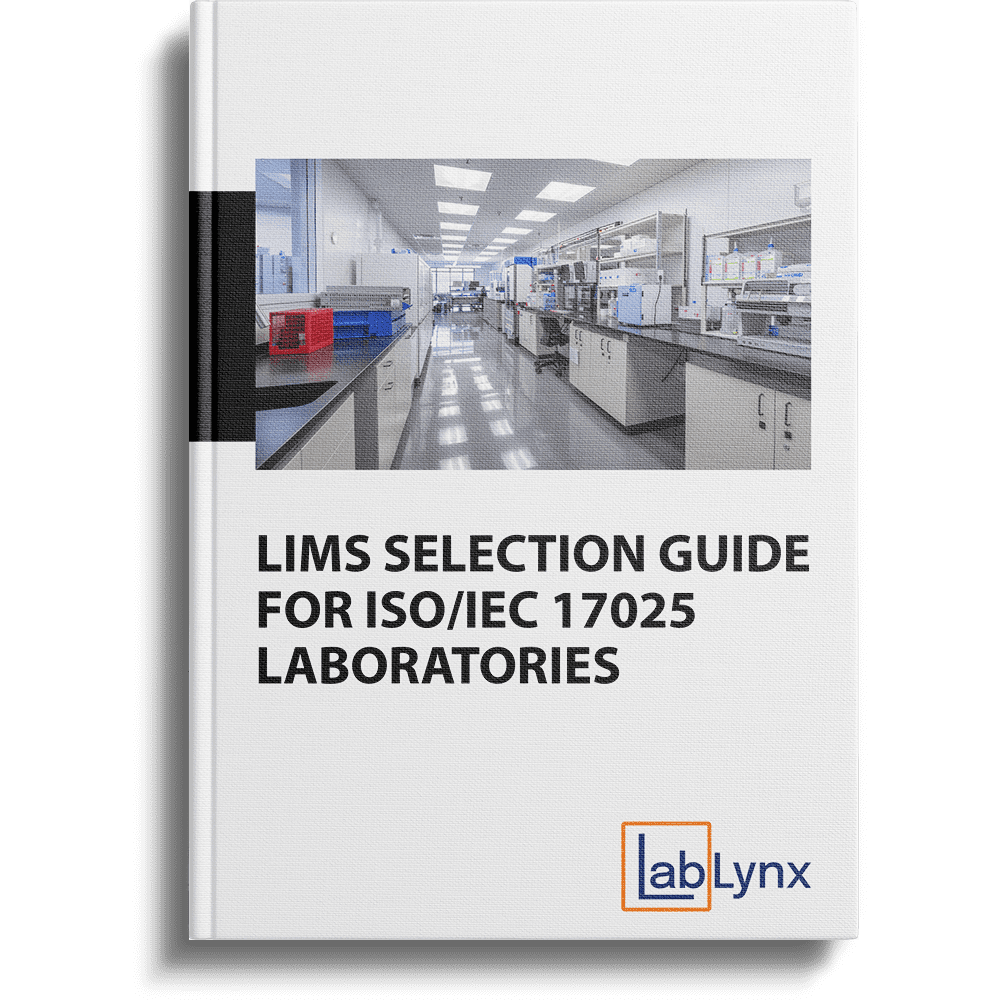
LIMS Selection Guide for ISO/IEC 17025 Laboratories
A free LabLynx e-book on choosing laboratory informatics for an ISO/IEC 17025 lab, from what the standard asks of your lab to requirements, costs, demonstrations and choosing a vendor.
Get your free copy
- e-book
- Instant download
"*" indicates required fields
We also email you the link.
Choosing laboratory informatics for an ISO/IEC 17025 lab means matching what a system does to what the standard asks: competence, impartiality and consistent operation in testing, calibration and sampling. This LabLynx guide maps the standard's clauses to specific requirements, then covers security, flexibility, cost, implementation and support, and the path from requirements specification to vendor.
What you will learn
- What ISO/IEC 17025 asks of a lab. Competence, impartiality and consistent operation, across the standard's general, structural, resource, process and management system requirements.
- Which functions map to the standard. Requirements tied to its clauses, from unique sample identifiers to instrument lock-out and audit management.
- What to weigh besides features. Cybersecurity, flexibility, pricing models, implementation and what maintenance, support and warranty cover.
- How to go from requirements to a vendor. A requirements specification, a request for information, demonstrations and the final choice.
What is inside the guide
From what ISO/IEC 17025 asks of a lab to choosing a vendor: here is what the guide covers.
Introduction to ISO/IEC 17025
The standard asks testing, calibration and sampling laboratories to demonstrate competence, impartiality and consistent operation. See where it came from, from ISO Guide 25 in 1978 to the 1999 standard and its revisions, how it goes beyond ISO 9001, and why society benefits from labs that meet it.
Go deeper: ISO 17025 compliance
The labs ISO/IEC 17025 affects
The standard applies to any organization performing laboratory activities, whatever its number of personnel. The guide describes the labs it touches, analytical and regulatory testing, product development and manufacturing, basic and applied research, and reference measurement and calibration, and explains why clinical labs look to ISO 15189 instead.
What ISO/IEC 17025 asks of laboratories
The guide reads the standard's three goals, competence, impartiality and consistent operation, then walks through its general, structural, resource, process and management system requirements, including the 11 aspects of lab work in its process section. It closes with the gaps worth filling from other frameworks, such as lab safety, and the benefits labs report from compliance and accreditation.
Go deeper: ISO 17025 deficiency data from A2LA and ANAB
Laboratory informatics options and the QMS
Workflow, instruments, budget, growth plans, in-house technical help and risk tolerance all shape what a lab should invest in, including whether a hosted, software-as-a-service option makes more sense. The guide compares the options an ISO/IEC 17025 lab meets, from the LIMS to laboratory execution systems, ELNs and quality management systems, and explains why a QMS alone does less for the standard than a LIMS or a LIMS paired with a QMS.
Go deeper: Laboratory informatics
Features and functions for ISO/IEC 17025 compliance
A table ties clauses of ISO/IEC 17025:2017 to specific requirements, each explained in plain terms. It covers test, sample and result management; quality, security and compliance; and operations and reporting, from unique sample identifiers and multi-level review of results to instrument lock-out, audit management and data retention.
Go deeper: Locking out instruments that are out of calibration
Cybersecurity, compliance and flexibility
The standard's section 7.11 asks that a lab's information management be protected from unauthorized access, tampering and loss, so the guide shows how a cybersecurity plan and framework feed the requirements a lab sets for vendors. It also explains why well-designed standards give a clearer path than regulations alone, and how to test a vendor's claim that its product is user-configurable.
Go deeper: Lab cybersecurity
Cost considerations
Everything in a laboratory informatics purchase is either licensing or hourly services, and the guide shows how to read an estimate or statement of work with that in mind. It compares one-time licenses with subscriptions; named, concurrent and unlimited users; the two kinds of fixed cost to be wary of; and how to lay out up-front, first-year and ongoing costs.
Go deeper: How a LIMS is priced
Implementation, integrations and support
What to ask a vendor about implementation, from a project manager who stays from planning to go-live, and references, to legacy data and your schedule, and how its product connects to instruments and other software through standard protocols and APIs. It also sets out what maintenance, support and warranty should cover, and the setup, training and configuration services a lab may need.
Taking the next step
A four-step path from research to purchase: build a requirements specification from a thorough starting point such as LIMSpec, issue part of it as a request for information, open a dialogue with vendors and see demonstrations, then finalize the specification and choose. Along the way, the guide lists vendors and consultants, examples of accreditation bodies and a reference library on the standard.
Key takeaways
- ISO/IEC 17025 asks for more than a quality system. It asks testing, calibration and sampling labs to demonstrate competence, impartiality and consistent operation; accreditation recognizes competence to produce technically valid results, where ISO 9001 registration covers only the quality management system.
- Tie your requirements to the standard's clauses. The guide maps ISO/IEC 17025:2017 to specific functions, from unique sample identifiers and multi-level review of results to instrument lock-out, nonconformance tracking, audit management and data retention.
- Value matters more than a low price. Know what the estimate or statement of work includes, how users are counted, and whether a fixed cost hides hourly services.
- Ask how the vendor implements and supports. A project manager from planning to go-live, references, care of legacy data, integration with instruments and other software, and what maintenance, support and warranty cover.
- Finish the specification after the demonstrations. Start with a short list of critical requirements, see several demonstrations, then finalize, and expect that no single vendor meets every need.
Taking the next step, in four steps
Research a specification tailored to your lab. Start from a thorough base such as LIMSpec, built on ASTM E1578-18 and standards including ISO/IEC 17025, and pick a limited set of requirements that matter most, such as those tied to the standard.
Issue part of it as a request for information. Keep the RFI concise, direct and honest, limited to your critical requirements, to narrow the field to a few quality candidates.
Open a dialogue with vendors and see demonstrations. Ask what their system will do for your lab and how it fits your budget, and watch how data is added, edited, tracked and protected.
Finalize the specification and choose a vendor. Have the remaining vendors respond to the full specification, follow up on references, and know in advance where your lab can be flexible.
Who it is for
Lab managers and directors
who are charged with finding informatics for an ISO/IEC 17025 lab and want to know which features, costs and vendor questions matter.
Quality leads and quality teams
who need to see how the standard's clauses, from method validation to audits and nonconformance, become requirements a vendor must answer.
IT staff and system administrators
who weigh on-site against hosted options, cybersecurity, integrations and the maintenance and support a system will need.
Written for Analytical and regulatory testing, product development and manufacturing, basic and applied research, and reference measurement and calibration labs.
Which functions does the guide tie to ISO/IEC 17025 compliance?
How does the guide recommend using a requirements specification?
How does the guide explain competence, impartiality and consistent operation?
What does the guide say to weigh on cost?
What does the guide suggest asking a vendor about implementation and integration?
How does the guide tie cybersecurity to ISO/IEC 17025?
More free guides
 Free guideThe Ultimate Guide to Laboratory ComplianceNavigate the complex world of lab regulations with confidence. This guide breaks down key standards across industries including clinical, pharma, food, and environmental, helping labs stay audit ready, improve quality, and protect data. It is a must-have resource for building a safer, smarter, and fully compliant lab operation.Get this free guide
 Free guideLIMS Selection Guide for Manufacturing Quality ControlChoosing a system for a manufacturing quality control lab? This free guide covers the industry standards QC labs work under, how to evaluate vendors and develop a requirements specification, and a complete blank specification template, so you can keep product quality consistent and stay compliant.Get this free guide
 Free guideLIMS Selection Guide for Food Safety and QualityChoosing a system for a food or beverage lab? This free guide covers the food safety standards and laws your lab works under, from HACCP and ISO 22000 to FSMA, the features a food lab needs beyond the basics, and a blank requirements template, so you can compare vendors with confidence and stay audit-ready.Get this free guide
Free guide
LIMS Selection Guide for ISO/IEC 17025 Laboratories
e-book
- What ISO/IEC 17025 asks of a lab
- Which functions map to the standard
- What to weigh besides features