Free guidePDF · 20 pages · 20-minute read
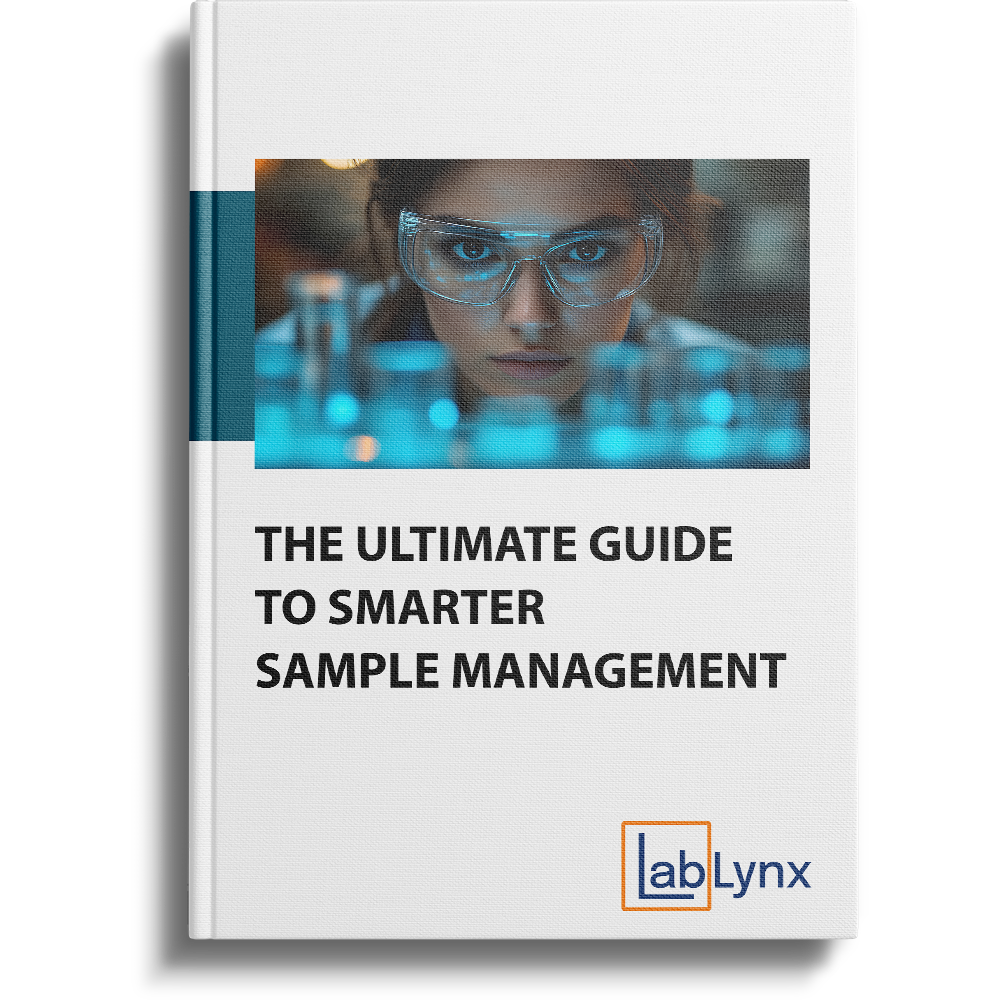
The Ultimate Guide to Smarter Sample Management
A free 20-page LabLynx guide to sample management best practices, from intake and labeling to storage, chain of custody and disposal.
Get your free copy
- 20 pages
- Instant download
"*" indicates required fields
We also email you the link.
Sample management is how a lab identifies, labels, stores, moves and documents every physical sample, from intake to disposal, so that each one can be found and trusted. This LabLynx guide builds it on three pillars: traceability, connectivity between people, instruments and records, and control through defined, checked workflows.
What you will learn
- Where sample errors really start. Handwritten labels, spreadsheets, unmapped freezers and instruments that do not share data.
- The five elements of a sound framework. Barcode or QR identifiers, one inventory, defined workflows, audit trails and role-based access.
- How to label and store without losing a sample. Labels printed from the record, scanned at every handoff, and storage mapped down to the slot.
- A plan you can start this quarter. Five steps, from mapping your sample lifecycle to measuring what improved.
What is inside the guide
From the cost of a lost sample to a plan for your own lab: here is what the guide covers.
The real cost of sample mismanagement
Small errors in labeling, logging and storage snowball into retests, delays, failed audits and lost trust. See where they start: manual processes, disorganized storage and fragmented records.
Go deeper: Reducing human error in the lab
Foundations of smarter sample management
Before any new technology, a lab needs three pillars (traceability, connectivity and control) and five working elements, and it helps to know why smarter usually means simpler, not more complicated.
From freezer chaos to full visibility
Storage falls apart when sample volumes outgrow paper logs and informal freezer maps. The fix is a searchable record for every sample, tied to its freezer, rack, box and slot, with alerts before samples expire.
Go deeper: Laboratory inventory management
Labeling without losing: barcodes, QR codes and beyond
A damaged or ambiguous label makes a sample anonymous. Why labeling still fails, and how labels generated from the record and scanned at every handoff keep each vial linked to its data.
Go deeper: How labs prevent lost samples
Chain of custody made easy (and audit-proof)
Paper and spreadsheet custody logs leave gaps during transfers, unclear ownership and edits with no history. What an automated custody record should hold: who, what, where and when, for every action.
Go deeper: Chain of custody management
Integrated instruments, automated workflows
When instruments and records do not talk, analysts retype results and errors creep in. How connected instruments and rule-based workflows put each result on the right sample record.
Go deeper: Sample management with IoT and automation
Sample data meets AI: what is coming next
Predictive alerts, anomaly detection and capacity planning are starting to reach labs. What they need first: structured data, central records and connected instruments.
Building your smart sample management plan
A five-step roadmap with the questions to ask your team, example goals and a phased rollout, so improvement starts with intake and labeling rather than a big-bang change.
Go deeper: How the sample lifecycle works in a LIMS
Key takeaways
- Most sample errors are small and preventable. They come from handwritten labels, spreadsheets, unmapped freezers and records that do not connect, not from careless people.
- Three pillars hold a sound approach together. Traceability, so every sample's location and history are known; connectivity, so data moves without retyping; control, so every step follows a defined, checked workflow.
- Five elements come before any new technology. Barcode or QR identifiers, one central inventory, defined workflows from intake to disposal, automatic audit trails, and role-based access.
- Labels should come from the record. A label printed from the sample's record, and scanned at every transfer, is what keeps a physical vial linked to its data.
- Start small and measure. Roll out in phases, beginning with intake and labeling, and track labeling error rates, turnaround time and retrieval time.
The five-step plan
Evaluate your current sample lifecycle. Map intake to disposal, and ask the people who handle samples where errors and delays happen.
Define goals and requirements. For example: full traceability, barcode scanning at intake, and no paper custody logs.
Choose the right tools and partners. Check fit with your workflows, your regulations, your instruments and the support on offer.
Implement in phases and train your team. Start with intake and labeling, name a project lead, and collect feedback early.
Measure, improve and future-proof. Track turnaround time, labeling error rates and retrieval time, and refine from there.
This page is the summary. The full guide has the detail, all 20 pages of it.
PDF · 20 pages · 20-minute read. Free.
Who it is for
Lab managers and directors
who need a clear view of where samples go wrong, and a plan they can put in front of their team.
Quality and compliance leads
who want custody records and audit trails that stand up without a scramble before each audit.
Scientists and technicians
who handle samples every day and want fewer manual logs and fewer hunts through the freezer.
Written for Research, clinical diagnostics, pharma and biopharma, environmental testing and forensic labs.
What does the guide say causes most sample errors?
What are the three pillars of smarter sample management?
What should a lab have in place before it adds new technology?
How does the guide recommend labeling samples so they stay linked to their data?
How does the guide say to keep custody records audit-ready?
Where does the guide suggest a lab start, and how should it measure progress?
More free guides
 Free guideThe Ultimate Guide to Laboratory ComplianceNavigate the complex world of lab regulations with confidence. This guide breaks down key standards across industries including clinical, pharma, food, and environmental, helping labs stay audit ready, improve quality, and protect data. It is a must-have resource for building a safer, smarter, and fully compliant lab operation.Get this free guide
 Free guideThe AI-Ready Laboratory: A Decision-Maker’s Guide to Building Smarter, Faster, More Profitable Lab OperationsLearn how forward-thinking laboratories are using AI, machine learning, and predictive analytics to cut costs, strengthen compliance, and scale operations without proportional headcount increases. This guide provides decision-makers with ROI models, governance frameworks, and a phased implementation roadmap for building an AI-ready laboratory powered by modern LIMS infrastructure.Get this free guide
 Free guideLIMS Selection Guide for ISO/IEC 17025 LaboratoriesChoosing a system for a testing or calibration lab? This free guide sets out what ISO/IEC 17025 asks of your records and results, how to weigh vendors against those requirements, and a step-by-step path from shortlist to purchase, so your lab can choose with confidence and stay ready for its next assessment.Get this free guide
Free guide
The Ultimate Guide to Smarter Sample Management
PDF · 20 pages · 20-minute read
- Where sample errors really start
- The five elements of a sound framework
- How to label and store without losing a sample