
Download Book For Free!
Resource Download
"*" indicates required fields
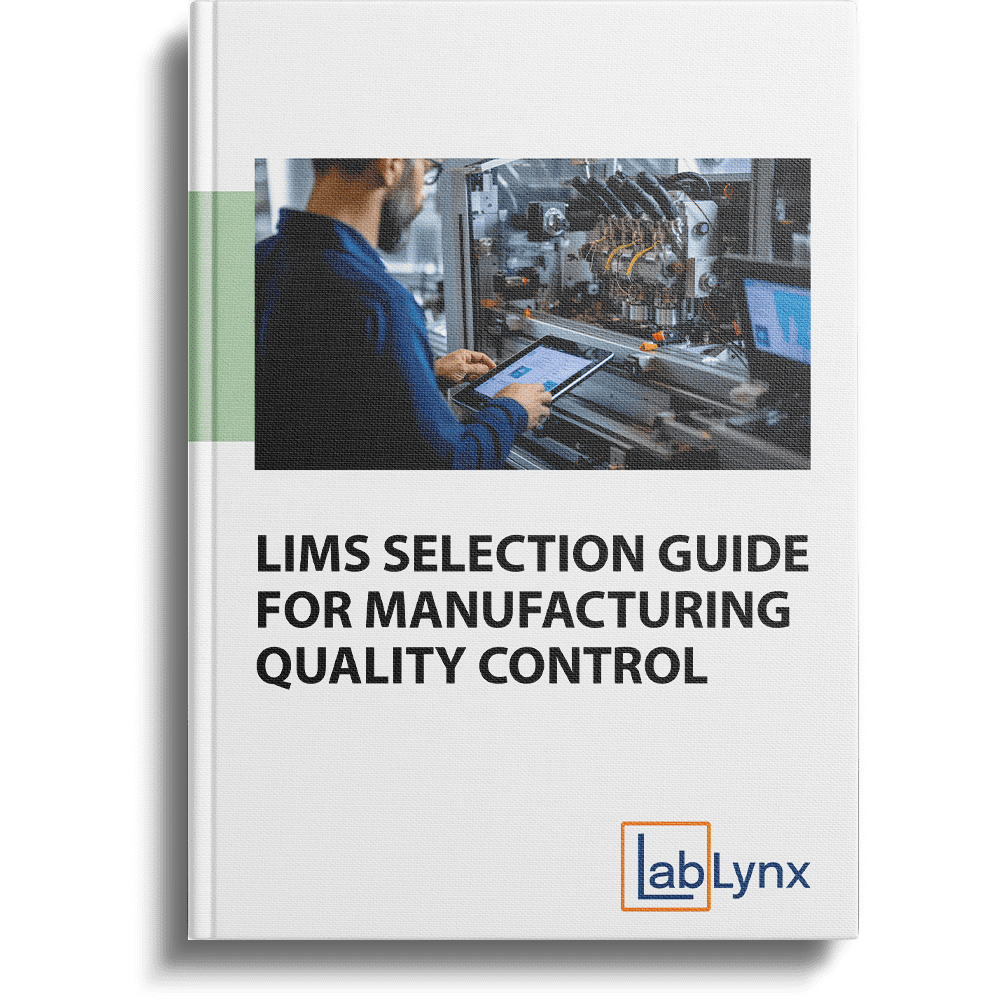
Choosing the Right LIMS for Manufacturing Quality Control: Your Ultimate Guide
Download this free guide from LabLynx to navigate the complexities of selecting and implementing a LIMS tailored to manufacturing quality control. Covering industry standards, vendor evaluation, requirements specification development, and a complete blank LIMSpec template, this book gives manufacturing leaders a strategic framework for maintaining product excellence, ensuring regulatory compliance, and optimizing laboratory efficiency.
Why a LIMS is Essential for Manufacturing Quality Control
A LIMS is more than just software; it’s the digital backbone of quality assurance and control in manufacturing. A well-implemented LIMS can:
- Streamline Workflows: Automate routine tasks, reduce manual errors, and accelerate testing processes.
- Ensure Compliance: Meet stringent industry regulations and standards, such as ISO 9001 and FDA 21 CFR Part 11.
- Enhance Traceability: Track raw materials, in-process samples, and finished products throughout the entire lifecycle.
- Manage Specifications: Centralize and enforce product specifications, ensuring consistent quality across batches.
- Analyze Data: Generate reports, identify trends, and make data-driven decisions to improve product quality and process efficiency.
Key Features to Look for in a Manufacturing Quality Control LIMS
- Compliance and Traceability
- Regulatory Support: Ensure the LIMS aligns with relevant industry standards and regulations (e.g., ISO 9001, FDA 21 CFR Part 11).
- Audit Trails: Maintain a comprehensive history of all data changes and user actions for traceability.
- Electronic Signatures: Implement secure electronic signatures for approval workflows and documentation.
- Document Control: Manage SOPs, test methods, and other critical documents with version control and collaboration tools.
- Functionality and Workflow
- Sample Management: Streamline sample registration, tracking, and chain of custody throughout the production process.
- Test Management: Automate test scheduling, data collection, and result calculations.
- Statistical Process Control (SPC): Monitor process variations and identify trends using real-time charts and reports.
- Nonconformance Management: Track and manage nonconformances, corrective actions, and preventive actions (CAPA).
- Reporting: Generate customizable reports for internal analysis and external stakeholders.
- Integration Capabilities
- Instruments: Seamlessly connect the LIMS with laboratory instruments and manufacturing equipment for automatic data capture.
- ERP/MES Systems: Integrate with enterprise resource planning (ERP) and manufacturing execution systems (MES) for comprehensive data management and process optimization.
- Scalability and Flexibility
- Scalability: Choose a LIMS that can grow with your company as production volumes and complexity increase.
- Flexibility: Opt for a configurable LIMS that can adapt to your unique manufacturing processes and workflows.
- Vendor Expertise
- Industry Experience: Select a vendor with proven experience in serving manufacturing quality control labs.
- Customer Support: Ensure responsive and knowledgeable support throughout implementation and ongoing use.
- Training and Resources: Look for comprehensive training materials and ongoing educational resources.
Choosing the Right LIMS: A Strategic Approach
- Needs Assessment: Identify your lab’s specific requirements, pain points, and regulatory obligations.
- Research and Shortlist: Research LIMS vendors, compare features, request demos, and read customer reviews.
- Proof of Concept: Implement a pilot project to test the LIMS in your production environment.
- Implementation and Training: Work with the vendor to ensure a smooth implementation process and comprehensive staff training.
LabLynx: Your Partner in Manufacturing Quality Control
LabLynx is a trusted provider of LIMS solutions designed for manufacturing quality control. Our LIMS empowers you to:
- Ensure Compliance: Meet regulatory requirements and industry standards with ease.
- Optimize Efficiency: Automate tasks, reduce manual errors, and accelerate testing processes.
- Elevate Quality: Identify and address quality issues proactively, ensuring consistent product excellence.
- Drive Continuous Improvement: Gain actionable insights from data to optimize processes and reduce costs.