Your laboratory probably already uses artificial intelligence. Perhaps you have algorithms that analyze spectroscopy data, machine learning models that predict protein structures, or software that helps identify anomalies in quality control testing. You might even use ChatGPT to help draft protocols or summarize literature. But AI agents represent something fundamentally different from these AI analysis tools—and understanding that difference matters if you want to compete in the next generation of laboratory operations.
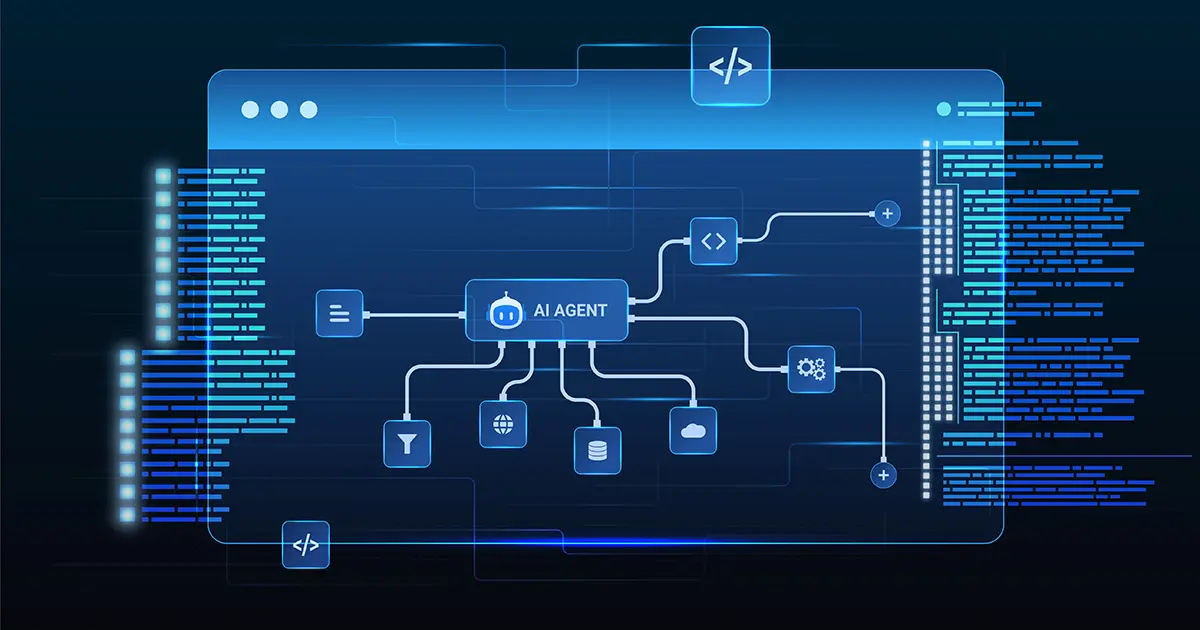
An AI agent doesn’t just analyze data and show you results. It takes autonomous actions across your laboratory systems. It doesn’t wait for you to click “run analysis”—it monitors instrument queues, detects anomalies, reorders reagents when inventory drops, adjusts workflows based on sample priority, and routes results to appropriate personnel without human intervention. The difference between AI analysis tools and AI agents is the difference between a calculator and an autopilot. One assists your decisions; the other makes and executes decisions autonomously.
This distinction changes everything about laboratory efficiency, scalability, and operations. It also creates new requirements for laboratory infrastructure that most labs haven’t yet considered. Let’s explore what AI agents actually do in laboratory settings, why they’re different from the AI you already use, and what it takes to implement them successfully.
The Critical Distinction – AI Tools vs AI Agents
Most laboratories interact with AI as analysis tools. These systems work in a request-response pattern: you provide data, the AI processes it, and you receive results. AI analysis tools excel at pattern recognition, prediction, classification, and optimization. They help you make better decisions faster.
Examples of AI analysis tools in labs:
- Mass spectrometry software that uses machine learning to identify compounds
- Image analysis systems that quantify cellular features from microscopy
- Predictive models that forecast equipment maintenance needs
- Natural language processing tools that extract information from literature
- Statistical algorithms that detect outliers in testing data
These tools are tremendously valuable, but they require human operators to feed them data, interpret results, and decide what actions to take based on those results.
AI agents operate completely differently. An agent is autonomous software that perceives its environment, makes decisions based on goals you’ve defined, and takes actions to achieve those goals—all without requiring human intervention for each step. Agents have three defining characteristics:
- Autonomy: They operate independently based on rules and objectives
- Perception: They continuously monitor their environment through sensors, APIs, and data feeds
- Action: They make changes to systems, trigger workflows, and execute tasks
In laboratory settings, AI agents connect to your laboratory information management system (LIMS), instruments, inventory systems, and other infrastructure to continuously optimize operations.
Real AI Agent Use Cases in Labs Today
AI agents aren’t science fiction—they’re already transforming laboratory operations in specific, measurable ways. Here are concrete examples of how laboratories deploy agents right now:
Sample Routing and Prioritization Agents
Traditional workflow: A laboratory receives samples, staff manually review test orders, check instrument availability, and assign samples to appropriate workstations based on their judgment.
Agent-powered workflow: An AI agent continuously monitors incoming samples, test orders, instrument availability, and current queue depths. It automatically routes STAT samples to the fastest available instrument, batches routine samples for efficiency, and reorders the queue when priorities change—all in real-time without human intervention.
Impact: Reduces sample turnaround time by 30-40% by eliminating manual routing decisions and optimizing instrument utilization continuously.
Predictive Maintenance Agents
Traditional approach: Instruments run until they fail or until scheduled preventive maintenance occurs. Staff manually track calibration dates and performance metrics.
Agent-powered approach: An AI agent continuously analyzes instrument performance data—reading precision, response times, baseline stability, error rates. It detects subtle degradation patterns that indicate upcoming failures and automatically schedules calibration or maintenance before problems affect results.
Impact: Reduces unexpected downtime by 60-70% and prevents batches of samples from being rerun due to instrument drift.
Intelligent Inventory Management Agents
Traditional system: Staff manually track inventory, notice when reagents are low, and submit purchase orders. Shortages delay testing when high-usage periods occur unexpectedly.
Agent-powered system: An AI agent monitors reagent usage patterns across different tests, times of day, and seasonal trends. It predicts shortages before they occur, automatically generates purchase orders with preferred vendors, verifies deliveries against orders, and even adjusts ordering patterns based on lead time variations.
Impact: Eliminates stockouts while reducing excess inventory by 40-50%, freeing capital and storage space.
Quality Control Monitoring Agents
Traditional QC: Staff run control samples at scheduled intervals, manually review results, and approve or reject runs based on Westgaard rules or other criteria.
Agent-powered QC: An AI agent continuously monitors all control results, patient results, and instrument performance metrics. It automatically flags anomalies using sophisticated statistical methods, reruns samples that fail criteria, and alerts supervisors only when results suggest systematic problems requiring human investigation.
Impact: Catches quality issues 2-3 hours faster than manual review while reducing false-positive alerts that waste staff time.
Data Integration and Reporting Agents
Traditional workflow: Results from multiple instruments must be manually reviewed, transcribed into reports, formatted according to client specifications, and sent to appropriate recipients.
Agent-powered workflow: An AI agent pulls results from all instruments as they complete, cross-references with LIMS data, applies client-specific formatting rules, generates PDF reports, and delivers them through appropriate channels (email, portal, API)—all within minutes of test completion.
Impact: Reduces reporting time from hours to minutes while eliminating transcription errors entirely.
How Laboratory Management Systems Enable AI Agents
AI agents don’t operate in isolation—they require robust laboratory infrastructure to function effectively. This is where laboratory information management systems (LIMS) become critical enablers of agent-based automation.
Modern LIMS platforms like LabLynx provide the foundation for AI agents through:
API Integration Layers: Agents need to communicate with instruments, inventory systems, and other software. Comprehensive APIs allow agents to retrieve data, send commands, and trigger workflows across your laboratory ecosystem.
Structured Data: Agents work best with clean, structured data. A well-implemented LIMS organizes sample information, test results, and operational data in formats that agents can interpret and act upon without human translation.
Workflow Engines: Laboratory operations follow complex workflows with decision points, parallel processes, and exception handling. LIMS workflow engines provide the framework within which agents operate, defining what actions are permissible and what requires human approval.
Audit Trails: When agents take autonomous actions, comprehensive logging becomes essential. LIMS platforms maintain immutable audit trails that record every agent decision and action, ensuring traceability and regulatory compliance.
Permission Systems: Not all agents should have access to all functions. Role-based access controls extend to agents, defining what each agent can monitor, what decisions it can make, and what actions require human authorization.
The infrastructure investment you make in laboratory management systems directly determines what agents can accomplish. Laboratories running on paper, spreadsheets, or limited software hit immediate ceilings on automation. Those with modern, integrated LIMS platforms can deploy increasingly sophisticated agents as the technology evolves.
LabLynx LIMS is specifically architected to support AI agent integration, with open APIs, flexible workflow engines, and comprehensive data models that make agent deployment practical rather than theoretical.
The Efficiency Gains – Why Labs Are Adopting Agents
The business case for AI agents becomes clear when you examine how they transform laboratory operations:
Eliminate Waiting Time: Traditional labs have significant “samples waiting for someone to process them” delays. Agents work 24/7, routing samples and triggering workflows the moment previous steps complete rather than waiting for staff to check queues.
Reduce Manual Data Entry: Studies show laboratories spend 20-30% of staff time on data transcription and system updates. Agents eliminate this entirely by automatically capturing data at the source and updating all connected systems.
Accelerate Issue Detection: Problems that humans discover during weekly reviews—reagent lot issues, instrument drift, unusual result patterns—get detected by agents within hours or even minutes of occurrence.
Optimize Resource Utilization: Agents continuously balance workload across instruments, staff, and facilities in ways that humans can’t maintain hour-by-hour. This typically improves throughput by 25-40% without adding resources.
Enable Predictive Operations: Rather than reacting to problems, agent-powered laboratories anticipate issues and prevent them. This shift from reactive to predictive operations represents the fundamental advantage of autonomous systems.
Scale Without Proportional Headcount: Perhaps most importantly, laboratories with effective AI agents can handle 2-3x sample volume increases with minimal staffing additions. The agents absorb the routine operational overhead that otherwise requires more people.
What Agents Can’t Do Yet
Understanding the current limitations of AI agents helps laboratories set realistic expectations and allocate resources appropriately.
Complex Experimental Design: Agents excel at optimizing known processes but struggle with creative experimental design requiring intuition, domain expertise, and scientific judgment. Designing a novel diagnostic assay or research protocol remains firmly in human territory.
Handling True Novelty: When agents encounter situations completely outside their training—truly unusual sample types, unprecedented failure modes, or edge cases not anticipated during design—they typically escalate to humans rather than improvise solutions.
Ethical and Strategic Decisions: Agents can’t determine whether to pursue a research direction, how to handle conflicts of interest, or what priorities matter most to your organization. These strategic and ethical decisions require human judgment.
Interpreting Ambiguous Data: When results could support multiple interpretations or when data quality is questionable, agents may flag the ambiguity but humans must make final determinations.
Building Relationships: Laboratory science involves collaboration, mentoring, client relationships, and organizational culture. Agents automate processes but don’t replace the human connections that make laboratories function as organizations.
The goal isn’t to replace scientists and laboratory professionals with AI agents. The goal is to free your team from routine operational tasks so they can focus their expertise on problems that actually require human judgment and creativity.
Building Your Laboratory’s Agent-Ready Future
The transition to agent-powered laboratory operations doesn’t happen overnight, but laboratories can take specific steps to position themselves for this evolution:
First, establish strong data infrastructure. Agents need clean, structured, accessible data to operate effectively. Laboratories still relying heavily on paper records or disconnected systems must modernize their data management before agents can deliver value.
Second, implement comprehensive integration capabilities. The more systems agents can connect to—instruments, inventory, scheduling, reporting—the more value they provide. Laboratory management platforms with robust APIs and integration frameworks become force multipliers for agent deployment.
Third, develop clear operational processes. Agents work best when laboratory workflows are well-defined and documented. Organizations with inconsistent or poorly-understood processes will struggle to automate them effectively.
Finally, partner with laboratory informatics providers who understand this direction. The infrastructure decisions you make today determine what automation becomes possible tomorrow. LabLynx builds laboratory management systems specifically designed for AI agent integration, with the APIs, data models, and workflow engines that agents require to operate safely and effectively.
The Path Forward
AI agents represent the next major evolution in laboratory automation—moving beyond simply digitizing manual processes to creating truly autonomous operations that optimize themselves continuously. The difference between AI analysis tools and AI agents is profound: one helps you work smarter, the other works for you.
Laboratories that understand this distinction and build appropriate infrastructure now will have significant competitive advantages as agent technology matures. Those that wait until agents are commonplace will find themselves trying to retrofit autonomous systems onto foundations that weren’t designed to support them.
The question isn’t whether AI agents will transform laboratory operations—they already are. The question is whether your laboratory will lead this transformation or scramble to catch up.
But autonomous operation introduces a critical challenge that laboratories must address: security. In Part 2 of this series: Securing the Autonomous Lab, we examine why AI agents create cybersecurity challenges that traditional laboratory IT wasn’t designed to handle—and what security architecture your laboratory needs to deploy agents safely.
Ready to build infrastructure that supports tomorrow’s AI agents while improving today’s operations? Contact LabLynx to discuss how modern laboratory management systems enable autonomous operations without sacrificing security, compliance, or data integrity.
Accelerate Your Lab's Success & Experience LabLynx
"*" indicates required fields
Explore the LabLynx Suites
LIMS Suite
Seamless Sample and Workflow Management
The LabLynx LIMS Suite empowers laboratories with the tools needed to manage samples, workflows, compliance, and more in one centralized system. It’s the backbone for labs seeking efficient, reliable, and scalable management solutions.
ELN Suite
Organize, Record, and Innovate
The LabLynx ELN Suite offers a modern approach to managing lab data and experiments. With its secure, intuitive platform, your team can record, store, and collaborate effortlessly, supporting innovation every step of the way.
Lab Automation
Automate for Efficiency and Growth
Streamline operations and boost productivity with the LabLynx Lab Automation Suite. Designed for labs ready to embrace advanced automation, this suite integrates systems, instruments, and workflows to deliver efficiency at scale.