
Every year, laboratories invest in software they don't fully need or skip software they desperately do. Both mistakes carry real financial consequences: compliance failures that trigger six-figure fines, manual processes that drain thousands in staff hours each quarter, and data silos that slow decision-making when speed matters most.
The two systems at the center of this decision are LIMS (Laboratory Information Management Systems) and ELN (Electronic Laboratory Notebooks). They sound similar and they are often discussed together, but they solve fundamentally different problems. Choosing the wrong one, or deploying the right one incorrectly, is a decision that compounds over time. And in regulated industries, the wrong choice does not just create inconvenience. It creates liability.
Whether you are evaluating your first system, considering an upgrade, or trying to figure out if you need both, this guide gives you the clarity to make a confident, ROI-driven decision.
What a LIMS Actually Does (and Why It Matters to Your Bottom Line)
A LIMS manages the operational backbone of your laboratory. It ensures every sample is tracked, every workflow executes consistently, and every regulatory requirement is documented without relying on someone's memory or a spreadsheet.
Core LIMS Capabilities
- Sample lifecycle tracking from receipt through disposal
- Automated workflow management that enforces SOPs
- Chain of custody documentation for legal and regulatory defensibility
- Instrument integration that pulls data directly from equipment, eliminating transcription errors
- Inventory management for reagents, consumables, and reference materials
- Compliance reporting for standards like ISO 17025, CLIA, 21 CFR Part 11, and GLP/GMP
The Financial Case for LIMS
Labs running manual or spreadsheet-based tracking typically absorb 15 to 25 percent more labor costs than those with automated sample management. A single compliance citation can cost anywhere from $10,000 to more than $500,000 depending on the industry and severity. LIMS eliminates the conditions that lead to those citations.
Beyond avoiding penalties, LIMS drives direct revenue impact. Labs that automate sample intake, testing workflows, and result reporting can increase throughput without proportional increases in headcount. For commercial testing labs, this translates directly to higher margins per test and the capacity to take on new clients without adding staff.
For high-volume testing labs, clinical diagnostics operations, QA/QC departments, and contract testing organizations, a LIMS is not optional. It is the infrastructure that makes scalable, compliant operations possible.
What an ELN Actually Does (and Who Cannot Operate Without One)
An ELN replaces the paper lab notebook with a secure, searchable, digital record of scientific work. Where a LIMS manages operations, an ELN captures the thinking behind the science: experimental design, observations, hypotheses, calculations, and evolving research narratives.
Core ELN Capabilities
- Structured and free-form experiment documentation
- Protocol templates that can be reused and versioned
- Real-time collaboration across teams, departments, or locations
- Multimedia support for images, graphs, instrument outputs, and annotations
- Searchable archives that make years of institutional knowledge retrievable in seconds
- Audit trails and electronic signatures for IP protection and regulatory documentation
The Financial Case for ELN
Research labs without proper documentation systems lose an estimated 20 to 30 percent of institutional knowledge when key personnel leave. IP disputes that hinge on who documented what first can be worth millions. And the time scientists spend searching for or reconstructing previous work, instead of advancing current projects, is time that never generates a return.
There is also a competitive dimension. Labs that can quickly retrieve past experimental data, replicate successful methods, and onboard new researchers faster hold a structural advantage over labs still relying on paper notebooks or scattered digital files.
For R&D laboratories, academic research groups, pharmaceutical development teams, and any lab where scientific documentation and IP protection are critical, an ELN is an essential investment.
LIMS vs. ELN: Where They Differ and Why It Matters
Understanding the distinction between these systems is critical to making the right investment. The following comparison highlights the dimensions that matter most to lab decision-makers.
Capability Coverage: LIMS vs. ELN vs. Both
Relative strength across six key laboratory dimensions
The critical takeaway: these systems are complementary, not interchangeable. A LIMS cannot replace the documentation flexibility of an ELN, and an ELN cannot manage the operational rigor of a LIMS. As the chart above illustrates, only an integrated approach covers every dimension a modern lab requires.
When You Need Both (and Why the Timing Matters)
Many labs operate in environments where both operational management and scientific documentation are business-critical. If your lab handles regulated testing and conducts research or method development, you likely need both systems working together.
Scenarios That Demand an Integrated Approach
- Pharmaceutical and biotech labs that must maintain GMP/GLP compliance while documenting R&D work and protecting IP
- Contract research organizations (CROs) managing high-volume client testing alongside proprietary method development
- Environmental and food safety labs expanding from routine testing into method validation or applied research
- Clinical labs running both diagnostic operations and translational research programs
What Integration Delivers
When LIMS and ELN systems share data, the operational benefits multiply. A sample logged in the LIMS can automatically populate the corresponding ELN experiment record. Results generated in a LIMS workflow can feed directly into research documentation. Scientists gain context without leaving their ELN, and lab managers maintain visibility into how research activities affect resource allocation and scheduling.
Integration also strengthens audit readiness. Instead of piecing together compliance evidence from two separate systems, labs can produce a unified data trail that connects operational records to the scientific context behind them. For labs facing FDA inspections, ISO audits, or accreditation reviews, this continuity is a significant advantage.
The net effect is measurable: lower administrative overhead, faster turnaround times, and fewer data integrity findings during audits.
LIMS ROI Drivers
Where LIMS delivers measurable return
ELN ROI Drivers
Where ELN delivers measurable return
The Cost of Waiting
Labs that defer this decision typically absorb increasing inefficiency. Manual bridging between disconnected systems through email chains, shared drives, and copy-paste between platforms creates exactly the kind of data integrity gaps that auditors flag and competitors exploit.
There is also a compounding effect. The longer a lab operates with fragmented systems, the more data accumulates in incompatible formats. This makes eventual migration harder, more expensive, and more disruptive. Labs that act early avoid the data cleanup burden that inevitably comes with delayed adoption.
Real-World Use Cases: LIMS, ELN, or Both in Action
Quality Control and Testing Labs
A QC lab uses LIMS to manage testing protocols, sample intake, and regulatory documentation. Any observations or nonconformities logged during testing feed into structured compliance records. The LIMS ensures nothing falls through the cracks, from sample receipt to final certificate of analysis.
Research and Development Labs
R&D teams benefit from ELNs for documenting hypotheses, evolving experiments, and capturing the kind of unstructured observations that often lead to breakthroughs. A connected LIMS adds structure by managing reagents, instruments, and test protocols, creating a balance between scientific creativity and operational consistency.
Clinical and Diagnostic Labs
These labs typically operate under strict compliance requirements, making LIMS indispensable. ELNs provide a flexible space to add interpretive notes, patient context, and research annotations that do not fit neatly into a rigid operational workflow. Together, they produce comprehensive, context-rich records that improve both compliance posture and clinical insight.
How to Make the Right Decision for Your Lab
The right choice depends on your lab's primary function, regulatory environment, and growth trajectory. Use this framework to guide your evaluation.
Which System Does Your Lab Type Need?
Recommended investment by laboratory function
Start with LIMS if...
Your lab's core activity is testing, analysis, or production. You manage a high volume of samples. Regulatory compliance is a daily operational requirement, not a quarterly exercise. You need to scale throughput without proportionally increasing headcount. If your lab generates revenue through testing services, LIMS is the system that protects and expands that revenue.
Start with ELN if...
Your lab's core activity is research, method development, or discovery. Scientific documentation and IP protection are critical to your organization's value. Collaboration across teams or geographies is essential. You need to preserve institutional knowledge as team members come and go. If your lab's competitive advantage depends on what your scientists know and discover, ELN is the system that captures and protects that advantage.
Plan for Both if...
Your lab spans testing and research. You operate under multiple regulatory frameworks. You anticipate growth into new service lines or capabilities. Data integrity across the full lab workflow is a strategic priority. Many labs that start with one system find that adding the other within 12 to 18 months delivers the most significant ROI, because that is when the data silos between operations and research become most costly.
Five Questions to Ask Before You Buy
- What percentage of our work is routine testing vs. research and development?
- Which compliance standards govern our operations, and how are we documenting adherence today?
- Where are we losing time to manual processes, duplicate data entry, or information searching?
- If a key team member left tomorrow, how much institutional knowledge would walk out the door?
- What does our lab need to look like in three to five years, and which system gaps will hold us back?
Why Labs Choose LabLynx for LIMS, ELN, or Both
LabLynx has spent more than 30 years building laboratory informatics solutions that work in real-world lab environments. Unlike vendors who bolt together acquisitions, LabLynx offers a modular platform where LIMS and ELN capabilities are designed to work together from the ground up.
This means labs can start with the system they need today and expand into an integrated platform as their needs evolve, without ripping and replacing existing infrastructure. Whether you are a 5-person startup lab or a multi-site enterprise operation, the platform scales to fit your reality.
Key Advantages
- A unified platform architecture that supports seamless LIMS and ELN data exchange
- Configurable workflows that adapt to your lab's specific processes, not the other way around
- Compliance-ready out of the box with built-in support for 21 CFR Part 11, ISO 17025, CLIA, and more
- Cloud, on-premise, or hybrid deployment to match your IT and security requirements
- A dedicated implementation and support team with decades of laboratory domain expertise
The result is a lab informatics foundation that reduces cost, mitigates risk, and scales with your operation.
Make This Decision Once. Make It Right.
The LIMS vs. ELN question is not about picking a winner. It is about understanding which capabilities your lab needs to operate efficiently, stay compliant, and grow. Labs that make this decision strategically rather than reactively position themselves to reduce costs, protect revenue, and outperform competitors still running on spreadsheets and paper notebooks.
The best time to make this investment was before the last audit finding. The second best time is now.
Ready to find out which solution fits your lab? Contact LabLynx for a personalized consultation and see how 30+ years of lab informatics expertise translates into measurable results for your operation.
Accelerate Your Lab's Success & Experience LabLynx
"*" indicates required fields
Explore the LabLynx Suites

LIMS Suite
Seamless Sample and Workflow Management
The LabLynx LIMS Suite empowers laboratories with the tools needed to manage samples, workflows, compliance, and more in one centralized system. It’s the backbone for labs seeking efficient, reliable, and scalable management solutions.
ELN Suite
Organize, Record, and Innovate
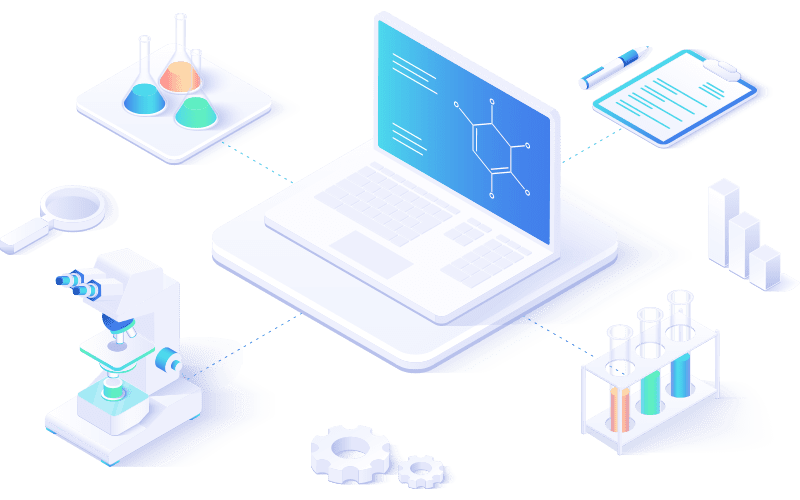
The LabLynx ELN Suite offers a modern approach to managing lab data and experiments. With its secure, intuitive platform, your team can record, store, and collaborate effortlessly, supporting innovation every step of the way.
Lab Automation
Automate for Efficiency and Growth
Streamline operations and boost productivity with the LabLynx Lab Automation Suite. Designed for labs ready to embrace advanced automation, this suite integrates systems, instruments, and workflows to deliver efficiency at scale.