Where Did the Other 44 Hours Go? Finding and Reducing Laboratory Turnaround Time
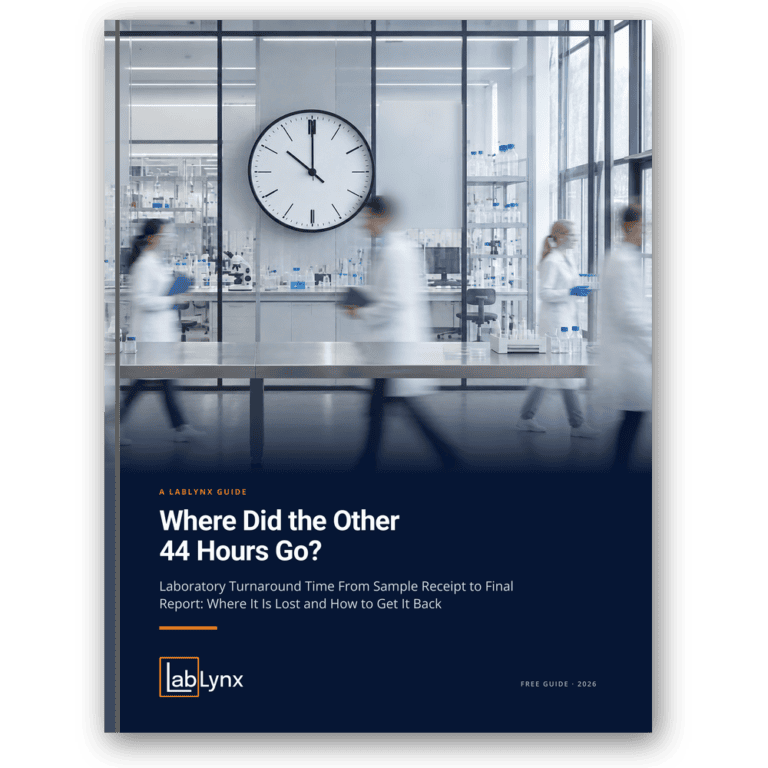
A free 103-page guide to laboratory turnaround time: nine timestamps, six kinds of lost time, and how to find the largest gap between receipt and report.
- Lab Automation

Topic
Nothing on this page of results matches that content type.
Show all types or try another page.
Showing 12 of 58 items
A free 103-page guide to laboratory turnaround time: nine timestamps, six kinds of lost time, and how to find the largest gap between receipt and report.
Every place lab work changes hands, from the customer's request to the report: where errors and delays begin, and why to remove handoffs before automating.
The six levels of laboratory automation in a free 75-page guide: find each workflow's level, set its ceiling and climb one rung at a time, starting next week.
Regulatory shifts landing in 2026, the frameworks behind them, the financial case for getting ahead, and a phased roadmap from gap analysis to accreditation.
What laboratory informatics actually covers, how the field evolved, and the way sample management, digital notebooks and automation connect people, instruments and data.
Five jobs worth handing to software first, including instrument data entry, chain of custody, certificates of analysis, holding times and spec checking.
A category built on optimism deserves a sceptical test. Three conditions decide whether a process is worth automating, and knowing which of yours qualify is the whole exercise.
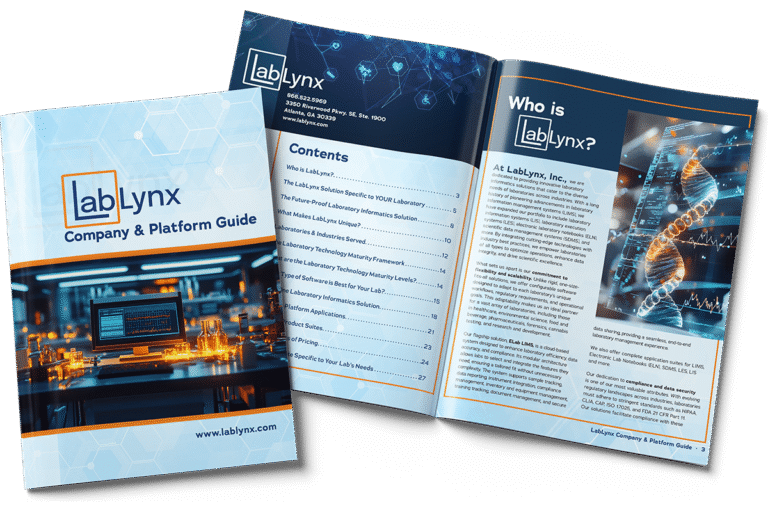
Free brochure covering the full product range, how a notebook differs from a LIMS, the technology maturity framework, and how pricing and implementation are structured.
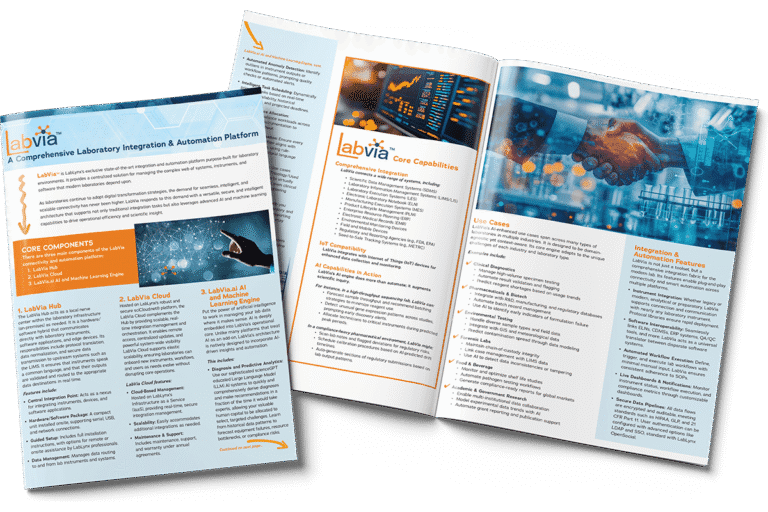
Datasheet for the LabVia platform: an on premises hub for instrument protocols, a cloud layer for real time integration, and machine learning over that data.
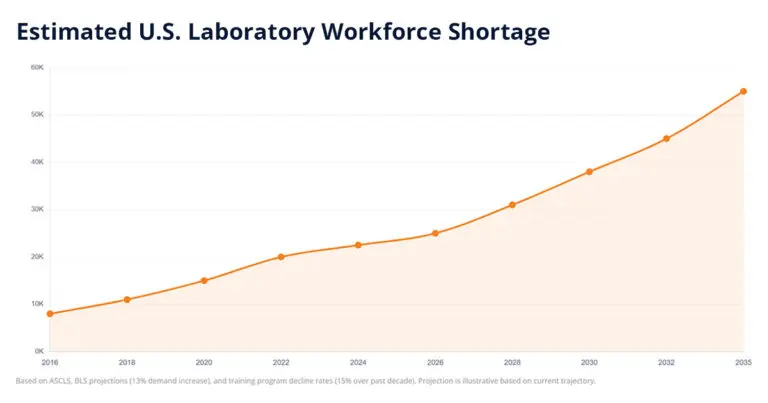
The structural math behind open lab positions, plus what informatics and automation change once hiring stops being a realistic answer on its own.
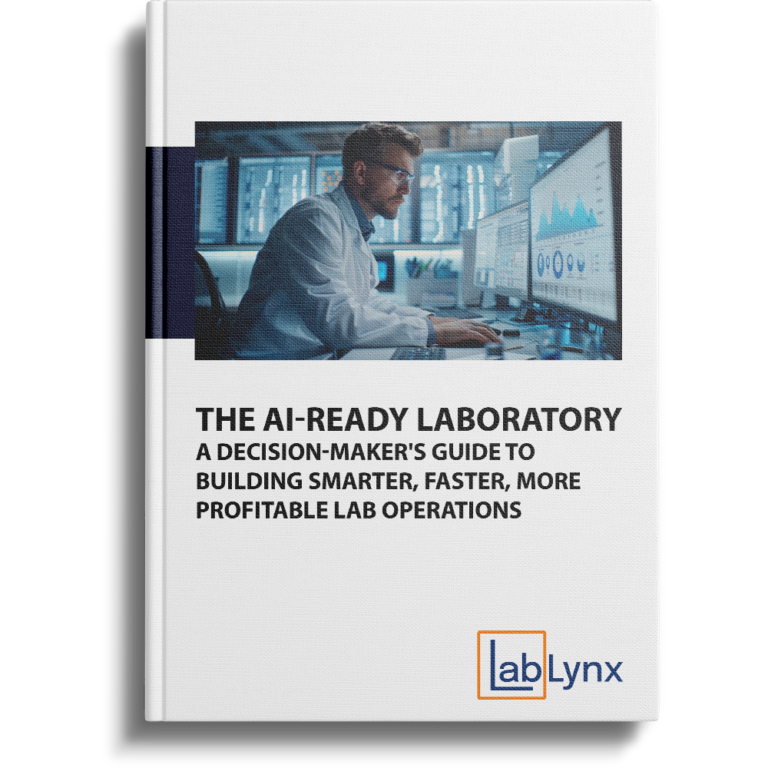
Free guide that puts a dollar figure on manual errors and disconnected instruments, then lays out a phased roadmap for adding AI without adding headcount.
Why autonomous agents break traditional lab security models, the attack scenarios to plan for, and the zero trust controls that keep agent operations safe.