Sample Management Reimagined with IoT and Automation
Connected sensors watching storage conditions, samples tracked from accessioning to archive, and robotic prep, all reporting back into one data system.
- LIMS
- Lab Automation
Topic
Nothing on this page of results matches that content type.
Show all types or try another page.
Showing 12 of 277 items
Connected sensors watching storage conditions, samples tracked from accessioning to archive, and robotic prep, all reporting back into one data system.
How machine learning spots instrument drift, contamination and reagent problems early, turning quality control from a reactive task into a proactive one.
A status note to clients during the CrowdStrike and Windows outage, covering which LabLynx servers were affected, how they recovered, and what came next.
Compares cloud and on-premises hosting on cost, deployment speed, accessibility, scalability and data control, with a checklist for deciding between them.
Backups, off-site data access, sample tracking and workflow continuity that keep a lab operating through fire, flood, cyberattack or shutdown.
Five arguments for environmental labs: stronger data accuracy, faster workflows, audit-ready compliance, lower operating costs and less paper in the process.
Mislabeled specimens and transcription slips reach patients, so this walks through the controls a healthcare lab can put between a sample and a wrong result.
What an experienced implementation partner does beyond installing software, from mapping lab workflows to avoiding the mistakes that stall projects.
How materials teams in aerospace and automotive use centralized data, instrument integration and standardized workflows to move new materials into production.
What LabLynx consultants do for a lab, from needs assessment and gap analysis onward, and the experience behind the recommendations they make.
Free brochure on connecting a LIMS to instruments and business systems, what the integration approach involves, and the accuracy and efficiency gains to expect.
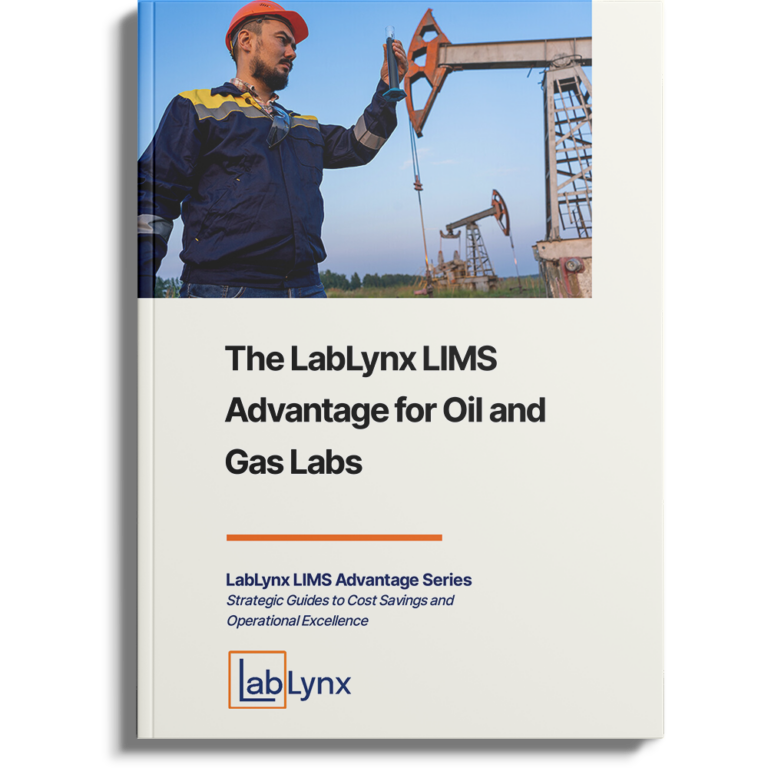
A free brochure covering sample logging, traceability, reporting and resource planning for labs serving oil and gas exploration and production.